2045 Net Zero Roadmap
HMM endorses international conventions that combat climate change, striving for differentiated sustainable growth. To this
end, we have advanced our goal to ‘Net Zero by 2045,’ which is five years ahead of the International Maritime Organization’s
(IMO) target of achieving Net zero emissions by 2050. In addition to our GHG intensity reduction target, we have set new
absolute reduction targets from the perspectives of LCA(Life Cycle Assessment) to mitigate the total amount of GHGs emitted.
We have also formulated a roadmap to achieve net zero emissions, which will guide us in accomplishing our goals.
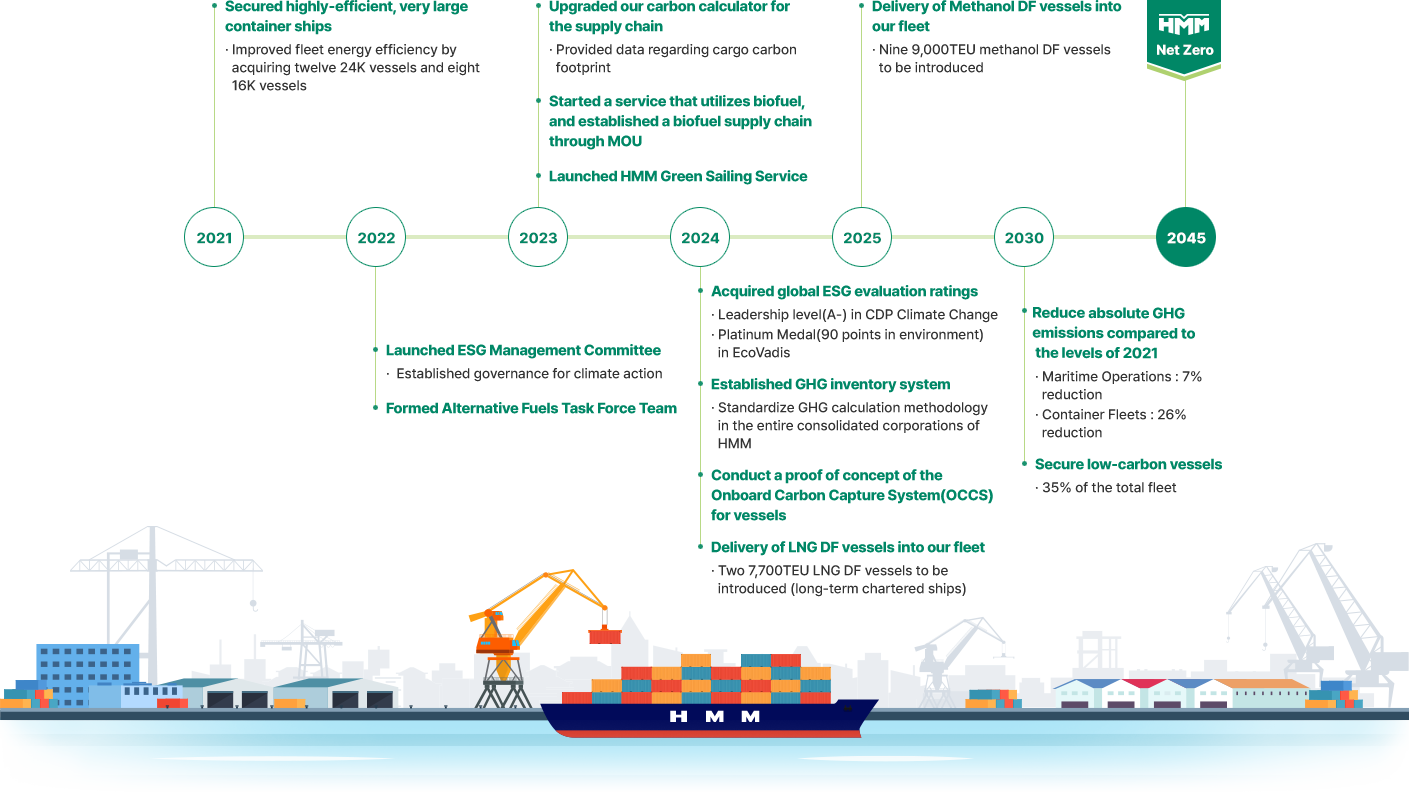
HMM 2045 Net Zero Strategy
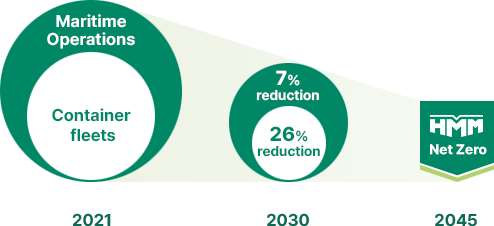
HMM 2030 GHG Reduction Targets
| Absolute GHG Emission Reduction Rate1) | Proportion of low-carbon ships secured | |
|---|---|---|
| Maritime Operations | Container fleets | |
| 7% | 26% | 35% |
1) Compared to 2021, Coverage: Scope 1 + Scope 3 Category 3
GHG Emission Intensity Reduction
Compared to 2008
| Category | 2030 goal | 2023 performance |
|---|---|---|
| All fleets | -50% | -56.6% |
| Container fleets | -70% | -68.2% |
2045 Net Zero Roadmap
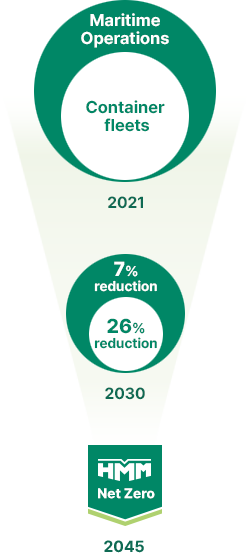
2045 Net Zero Strategy
HMM 2045 Net Zero Strategy
HMM 2030 GHG Reduction Targets
| Absolute GHG Emission Reduction Rate1) | Proportion of low-carbon ships secured | |
|---|---|---|
| Maritime Operations | Container fleets | |
| 7% | 26% | 35% |
1) Compared to 2021, Coverage: Scope 1 + Scope 3 Category 3
GHG Emission Intensity Reduction
Compared to 2008
| Category | 2030 goal | 2023 performance |
|---|---|---|
| All fleets | -50% | -56.6% |
| Container fleets | -70% | -68.2% |
Key Tasks to Reach Net Zero Emissions by 2045
Key Tasks to Reach Net Zero Emissions by 2045
On our journey towards Net Zero, our areas of focus are Green Horizon, Green Movement, and Green Management. Based on
these efforts, we have established Net Zero strategies that aim to serve two purposes: Growth and GHG reduction, which sets
our strategies apart from others.
Towards Green HMM
-
Expand the scope of green logistics
- Securing low-carbon vessels to expand green marine transport
- Building infrastructure for carbon efficient inland transportation
-
Transform into environmentally friendly terminals
- Expanding renewable energy use in Terminal equipments
- Introducing electric and hydrogen-powered vehicles within the ports
-
Reinvent as green working environment
- Introducing electric and hydrogen-powered vehicles
-
Transition to green fuels
- Extending from fossil fuel to alternative fuel engines and increasing the usage of low-carbon fuels
-
Switching from fossil fuel use to green alternatives to power terminal equipment
(wind turbines, solar panels, etc.)
-
Capitalize on new technologies to enhance energy efficiency
- Air lubrication, wind deflector, hull / propeller modification, etc.
-
Optimize our environment management
-
Operating vessels at consistent speeds
(through investments in terminals and partnerships for the minimization of demurrage) - Upgrading our GHG management systems (GHG Inventory, CII Management, Fit for 55 Management, Supply Chain Carbon Calculator, etc.)
- Creating Carbon-efficient value chain in collaboration with external and internal stakeholders within the supply chain (purchasing, capital goods, waste generation minimization, and selection of partners fulfilling environmental management)
- Mitigating GHGs emitted from the modes of transportation used for business trips through virtual meetings
-
Operating vessels at consistent speeds